-p-2000.avif)
%20(1).avif)


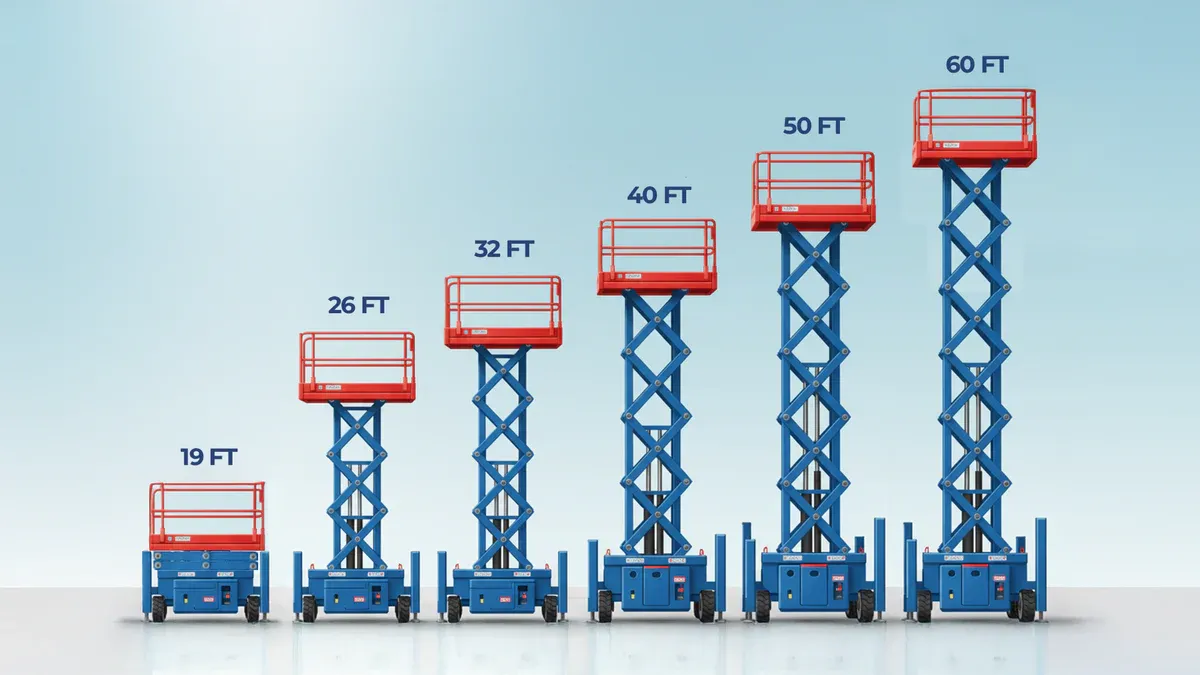
Quick Guide: Scissor Lift Sizes
- Standard Height Tiers: Scissor lifts generally fall into three main categories:
- Small (12–19 ft)
- Medium (26–32 ft)
- Large (40–60+ ft) for high-reach commercial projects.
- The "6-Foot Rule": Never confuse Platform Height with Working Height. Always add +6 feet to the platform spec to calculate the actual reach for your operator.
- Doorway Clearance: Need to fit through a standard single door? Ensure you choose a "slab" or "narrow" model with a chassis width between 30 and 32 inches.
- Lift Capacity: Size dictates strength. Compact electric models typically hold 500–800 lbs, while large Rough Terrain lifts can handle 1,000–1,500+ lbs of workers and tools.
Safety Standards: All scissor lift sizes in Canada must meet strict CSA B354 regulations. Always check the capacity plate and ensure operators are certified before use.
You're probably here because you need the right lift equipment for your job. Maybe you're wondering what scissor lift size will fit your warehouse aisles, or you're having a project soon and need to know how high a scissor lift goes.
To fully understand which scissor lift sizes fit your needs by just browsing online, you need to understand first the scissor lift dimensions and scissor lift heights, and estimate the actual size from there.
This guide is here to answer the questions you have in mind and help you make an informed decision by explaining the key factors that determine which lift you should use, whether it's the smallest or the tallest scissor lift.
Scissor Lift Size Chart (Small to Large)
Figuring out scissor lift sizes on your own can feel overwhelming. The need to jump from one source to another just to piece things together can be confusing at times.
To make it easier, we’ve compiled everything into a single chart that provides a clear view of the different sizes. Here's a general scissor lift size chart to illustrate the differences:
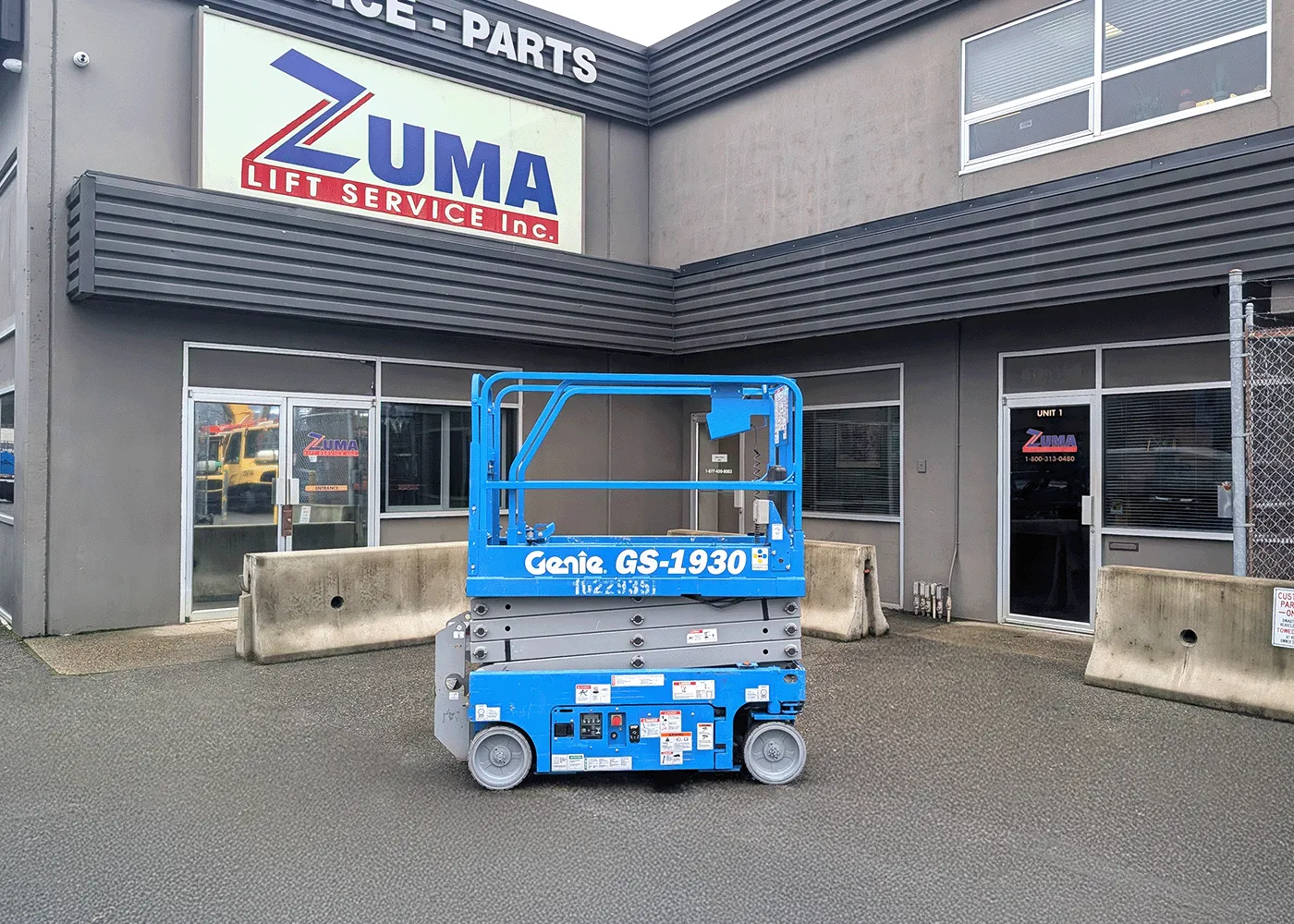
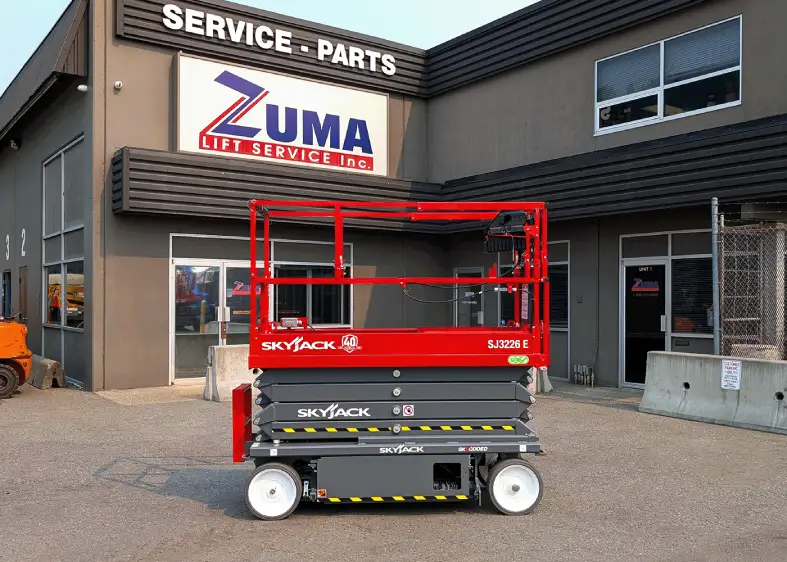
The tallest scissor lifts can reach over 60 feet, while tiny scissor lifts start at about 12 feet. Most businesses commonly choose a size somewhere in between.
Small Scissor Lifts (12–20 ft)
Small scissor lifts are designed for tight spaces where the job still requires safe elevation for workers. A tiny scissor lift with a 12-foot platform height may look modest, but it solves big problems in low-ceiling areas and narrow aisles.
On the other hand, a 20 ft scissor lift gives you extra reach while still fitting through standard doorways and tight warehouse aisles.
These compact machines are a smart investment for indoor work. Electric scissor lifts run quietly, carry up to 500–700 pounds of workers and tools, and handle everyday tasks such as stock picking, lighting maintenance, and ceiling installations.
In our 12–29 ft scissor lifts collection, you’ll find compact models in their actual looks to see if this size range fits your needs.
Large & High Scissor Lifts (26–32 ft)
Large scissor lifts are most needed in outdoor construction projects. A 30 ft scissor lift is the usual sweet spot for many commercial jobs, as they offer a wider, more stable base and can even handle heavier loads safely.
These larger units typically handle 1,000 to 1,500 pounds of total weight. You can put multiple workers on the platform along with their equipment and materials. These high lifts often feature powerful engines and rugged tyres, enabling them to operate on uneven terrain more efficiently.
Feel free to explore more options in the 30–46 ft scissor lift for sale collection range at Zuma to see the full specs.
What Are Scissor Lift Sizes and Dimensions?
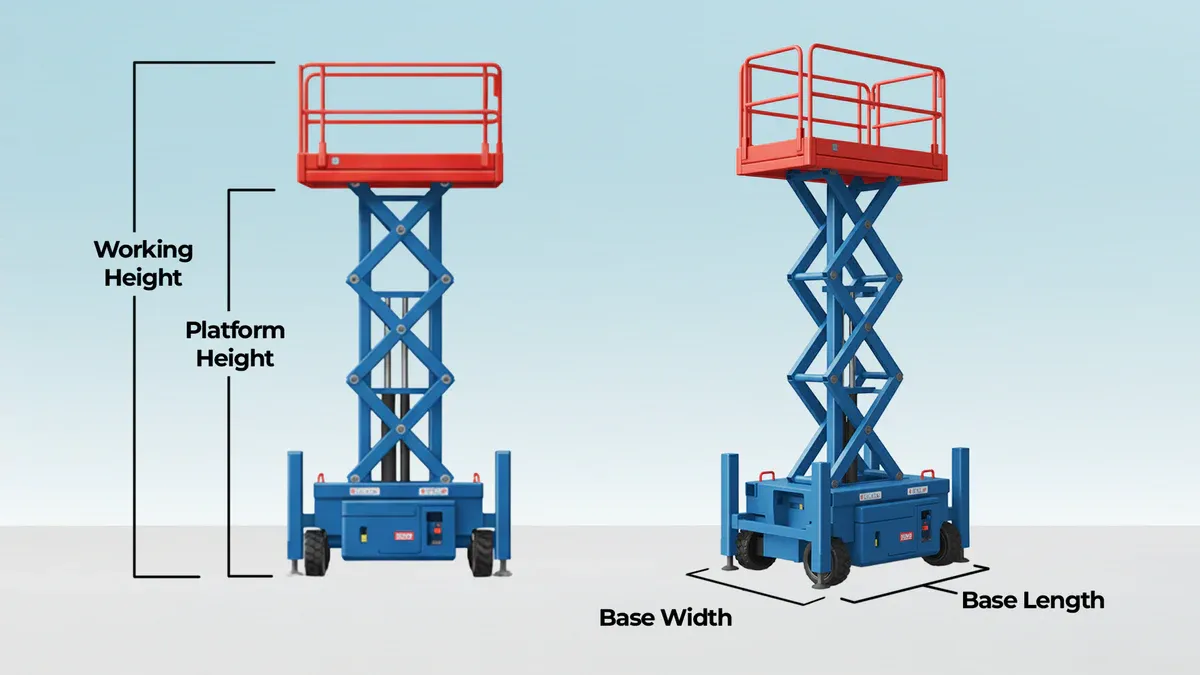
Scissor lifts come in many different sizes, and understanding their dimensions helps you pick the right one for the job.
Most people aren’t just interested in how high a lift can go, but they also want to know how stable it will be and whether it can move easily in tight or open spaces, because these factors matter most.
Two details that make the biggest difference are the gap between platform height and working height, and how the lift’s width and base size affect its balance and manoeuvrability.
Understanding Scissor Lift Height vs. Working Height
A common point of confusion when researching scissor lift heights is the difference between platform height and working height.
Platform height shows how high the actual platform can go, while the working height adds about 6 feet to that number to account for how high a person can reach while standing on the platform.
To elaborate further on this in an actual setting, a scissor lift with a 20 ft platform height provides a working height of approximately 26 ft. Understanding this distinction ensures you don’t under- or overestimate the reach needed for your tasks.
Typical Scissor Lift Widths and Base Dimensions
One factor that affects the manoeuvrability and stability of a scissor lift is its width and base dimensions, especially in confined spaces. Indoor projects may require narrow lifts, while outdoor projects often require a wider and more stable base.
Variations of these widths and base scissor lift dimensions may differ between manufacturers, but to give an overview of their common ranges:
How to Choose the Right Scissor Lift Size
Many businesses make expensive mistakes by focusing only on one factor when purchasing a scissor lift. Picking the right sizes of scissor lifts involves more than just looking at height numbers because not every project needs the tallest lift on the market.
In the table below, we help you with the deciding factors so you can easily assess everything on your end:
Think about your typical projects:
- Do you need to move the lift frequently during the workday?
- Will you be working in the same general area or will you be constantly repositioning?
This process ensures that the equipment you choose is not only functional but also perfectly suited to the specific challenges of your task.
Safety Standards to Consider
Safety considerations include not only the size of the scissor lift but also its maintenance, operator training, and the environment in which it is used. Before purchase, ensure that your lift aligns with regulatory standards to avoid risks and maintain worker protection.
The only standard that covers everything from stability requirements to load capacity specifications in all aerial lift categories is the CSA B354.2. This is a must-read, so you know how to completely inquire about the lift that you’re purchasing and what questions to ask.
Industry Applications
Different industries have specific needs that influence which scissor lift sizes work best for them. Understanding these diverse applications can help you refine your choice based on common industry practices and specific operational needs.
Key Takeaways on Scissor Lift Sizes for Businesses
By now, you’ve seen how critical it is to match your work requirements with the right lift. Businesses save time and money by choosing equipment based on accurate information.
Here's what every decision-maker needs to take note of:
- 12-20 ft Scissor Lifts: Dominate indoor work such as warehouses, retail, and maintenance
- 26-32 ft Scissor Lifts: Handle mixed indoor/outdoor applications effectively.
- 40+ ft Scissor Lifts: Tackle demanding construction and industrial projects.
- Height Calculations: Platform height vs. working height affects your actual project reach capabilities.
- Weight Capacity: Load capacity ranges from 500 lbs (small units) to 1,500 lbs (large units).
- Space Planning: Width and base dimensions determine accessibility and navigation limitations.
- Environment Assessment: Indoor/outdoor constraints guide your size selection decisions.
- Compliance Requirements: Safety standards (CSA) establish non-negotiable operational requirements.
Scissor Lift Sizes by Brand (Genie, JLG & Skyjack)
Many businesses are not only confused about which scissor lift size to get, but also about which brand to choose. There are plenty of options in the market, and it takes more than just height considerations to make sure you get what you really need.
One key factor is parts availability. You need to make sure that if something goes wrong, the replacement parts can be shipped to you quickly so your operations do not get delayed.
To help, we focus on three brands that stand out. Genie, JLG, and Skyjack are trusted worldwide for durability, performance, and strong parts support. All these three brands are well-supported, which means you will not have a hard time finding parts when you need them.
Genie Scissor Lifts
Genie scissor lifts are the best choice if you need a lift that’s easy to move around and simple to use. They’re compact enough to fit through narrow spaces yet reliable enough to handle everyday maintenance, warehouse work, or indoor projects. For jobs that require a bit more height reach, Genie also has larger models that can help with this need without sacrificing stability.
See the table below for a few highlighted Genie lifts by size we recommend:
.png)
What sets Genie apart: Genie’s designs are focused primarily on efficiency and operator comfort. Their smaller lifts are built for tight indoor areas, while their larger GS models are trusted for safe, steady performance when you need to reach higher areas.
JLG Scissor Lifts
JLG is known for its continuous innovation and reliable safety features. This brand is the first one to introduce all-electric scissor lifts, catering to businesses and industries that require clean and quiet operations like warehouses, retail stores, and healthcare facilities. But aside from this, JLG also introduced rough terrain scissor lift models that are built tough for outdoor projects, offering powerful stability on uneven ground.
Here’s a closer look at the JLG scissor lifts we recommend, broken down by size:
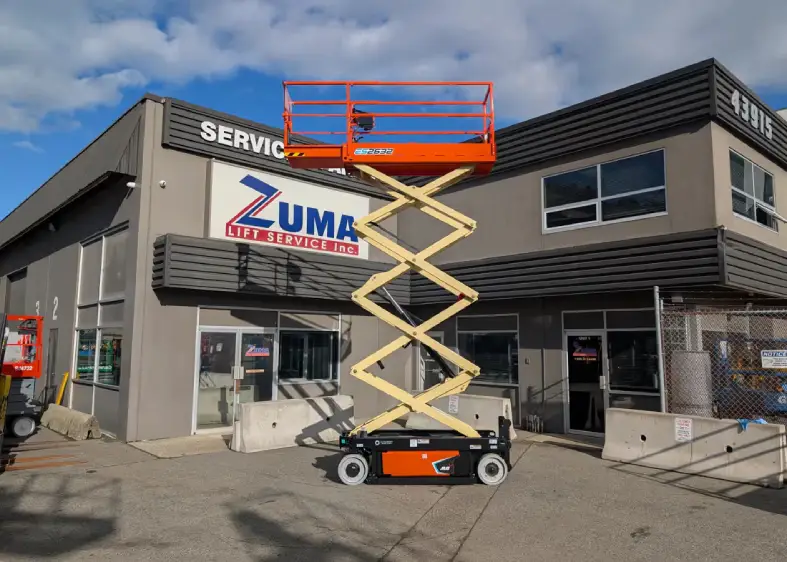
What sets JLG apart: JLG stands out for its wide range of solutions that anticipate all businesses’ lift requirements. This brand has set a reputation for decades and continuously innovates with new technology in its latest models.
Skyjack Scissor Lifts
Skyjack scissor lifts are all about keeping things simple and reliable. They’re designed so operators can get the job done without overcomplicated controls, and they’re easy for contractors or rental companies to maintain. With solid parts availability worldwide, you won’t be stuck waiting long if some parts need replacing.
To make it easier to skim through, here are our top Skyjack picks organised by size:
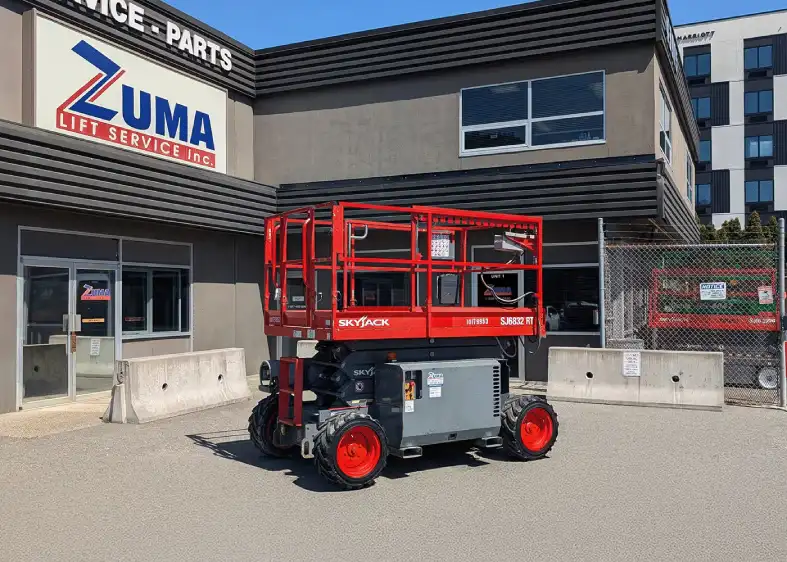
What sets Skyjack apart: Skyjack is known for its straightforward design and dependable performance. If you want a lift that’s tough, easy to service, and built to last, Skyjack is another brand you can count on.
At Zuma, we only carry brands with a proven reputation and reliable parts availability. We make sure our lift parts collections cover Genie, JLG, and Skyjack, so you can count on us during and after purchase. Our goal is to anticipate your needs ahead, keep your projects moving, and help you succeed without delays.
Scissor Lifts vs. Other Lift Equipment (Sizes Comparison)
Many decision-makers arrive here comparing scissor lifts with other equipment. While scissor lifts provide straight vertical access, they don’t extend horizontally.
If your project requires side reach, a boom lift or towable boom lift might be better suited.
For a quick overview, the chart below gives a quick side-by-side look at how scissor lifts stack up against other common lift equipment in terms of reach, capacity, and cost.
Why Choose Zuma for Your Lift Equipment Needs?
What sets Zuma apart isn’t just our equipment, but also our commitment to supporting you every step of the way. With our 24/7 customer service and specialist guidance, we ensure that you are receiving the right lift to meet your needs and the continued support to ensure your operation will always lean on success.
Here’s why businesses trust Zuma as their long-term partner:
- Certified quality – Every lift is rigorously inspected and certified to exceed safety and performance standards.
- Fast delivery – Ready-to-ship inventory means shorter lead times for your projects.
- Expert guidance – Our specialists help match you with the right lift for your exact needs.
- Flexible financing – Options designed to fit different budgets and business models.
- Nationwide service – Reliable maintenance and support across the North America.
24/7 customer support – Assistance anytime, anywhere, whenever you need it.
This guide covers the essential sizes and heights. If you are ready to find your machine today, explore our full inventory of new and used, CSA-compliant scissor lifts ready to ship across Canada.
Frequently Asked Questions
What is the difference between 19 ft and 26 ft scissor lifts?
A 19-foot scissor Lift offers 19 feet of platform height and an estimated 25 feet of working height and is ideal for indoor applications. For comparison, a 26-foot scissor Lift goes even higher at a 32-foot working height and is best suited to large facilities or external applications.
What is the height range of a scissor lift?
Typical heights on scissor lifts range anywhere from 12 ft (small indoor units) to 60+ ft on big scissor lifts. The maximum height on a scissor lift will vary by manufacturer and model.
What is the highest scissor lift available?
The tallest scissor lifts are sometimes in excess of 60 ft platform level (some 66 ft operating height at maximum), typically used in aviation, shipbuilding terminals, and mega constructions.
How high does a scissor lift go?
Standard lifts vary in height from 12 feet to 60 feet. If you're curious about the maximum reach of scissor lifts, it ultimately depends on whether you're seeking compact access for indoor use or elevation for outdoor industrial purposes.
How wide is a 26 ft scissor lift?
Typical 26-foot lifts are 46-48 inches in width and provide stability while maintaining manoeuvrability.
How wide is a 19 ft scissor lift?
They are narrower, about 32-34 inches in width, to go through narrow aisles and doors.
What are standard scissor lift sizes?
The scissor lift chart size usually comprises: 12–20 ft (small), 26–32 ft (medium), and 40–60+ ft (large scissor lift).
How high can a scissor lift go indoors?
Internally, ceiling clearance is a significant factor. A 20 ft scissor lift will usually suit warehouses, but ceiling heights will obstruct taller units.
Which scissor lift size is best for warehouses?
Small 20 ft scissor lifts are the ideal option for warehouses with narrow aisles and shelf heights.
Which scissor lift size is best for outdoor construction?
Outdoor projects need a 30 ft scissor lift, large scissor lifts, or rough-terrain models, which have greater capacity and stability for loads.
What is the difference between platform height and working height?
Platform height is the highest the platform can go above the ground, and the working height is typically platform height + 6 ft (average operator extension).
Are scissor lift sizes standardised?
Not at all. The majority of manufacturers are in typical ranges (12-60 ft), but certain scissor lift sizes will still vary.
Do scissor lift dimensions affect safety?
Yes. Wider bases increase stability, but safety operations are based on CSA B354.2.
What is the load capacity of different scissor lift sizes?
Smaller lifts hold around 500–700 lbs, while large scissor lifts can handle 1,200+ lbs or so, depending on the model.
How do scissor lifts compare to boom lifts in size?
Scissor lifts provide straight vertical access, while boom lifts add horizontal outreach for more flexible positioning.
About the Zuma Equipment Team



%20(1).avif)