-p-2000.avif)
%20(1).avif)


1-877-450-8003
Browse our selection of boom lifts, scissor lifts, and telehandlers from top brands like Genie, JLG, Skyjack, Haulotte,
Air-Tow and more.
Types of Scissor Lifts for Indoor and Outdoor Use
.avif)
Easy Delivery
%20(1).avif)
Flexible Financing
.avif)
CSA-Compliant
Selecting the right scissor lift type is about more than just height; it's about matching the machine to your terrain. Using a slab lift on uneven gravel isn't just inefficient; it's a safety risk.
At Zuma, we break down the 5 main types, from Electric for quiet indoor work to Rough Terrain for rugged Canadian job sites, so you can invest in the exact machine your project demands.
Not sure which type you need? Read our Comparison Guide below or browse our full inventory to see specs.
TYPES OF SCISSOR LIFTS WE SELL AT ZUMA
Why Trust This Guide? | Verified by the Zuma Canada Team
This [Scissor Lift Types Buyer's Guide] is curated and verified by the Zuma.ca Equipment Team, reflecting over 20+ years of combined experience in the Canadian aerial lift market.
All technical information is fact-checked against official industry standards from the Canadian Standards Association (CSA) and local safety regulations.
Our recommendations are based on helping thousands of Canadian contractors and facility managers find the right lift.
Last Reviewed and Verified: December 2025
Explore Scissor Lift Types by Power & Terrain
Scissor lifts are classified not only by their size or platform height, but two factors play a major role in matching the performance, safety, and practicality a buyer is looking for. It’s important to look out for the major factors, such as the type of power system they use and the terrain capability they are designed to operate on.
The following sections break down the five main types of scissor lifts, highlighting how each one functions, where they excel, and a more detailed information about them that you need to know before planning to purchase.
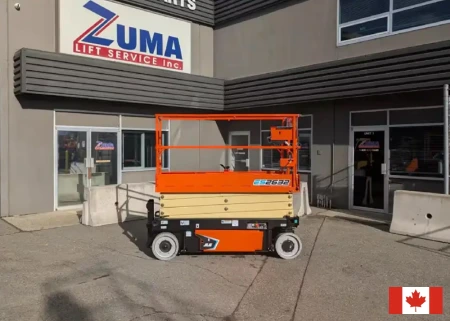
Electric Scissor Lifts (Battery-Powered/Slab)
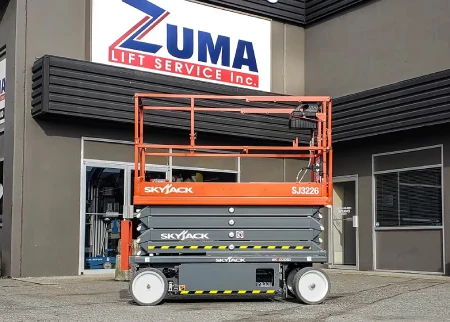
Electric scissor lifts are designed for businesses operating in indoor environments, requiring clean and quiet operation to avoid disruptions during business hours. This type of scissor lift runs on rechargeable batteries and uses an electric motor to power the lift’s mechanism. They operate smoothly and have non-marking tires, making them ideal for areas with finished floors and controlled settings.
Electric scissor lifts are also easier to maintain and more cost-efficient over time compared to fuel-powered types. To help you easily evaluate the features of electric scissor lifts, we’ve created a table below that summarizes their key characteristics:
Electric scissor lifts offer qualities and advantages that make them indispensable for modern indoor operations, such as reliability, low maintenance, and environmental efficiency without compromising lifting power or reach.
.webp)
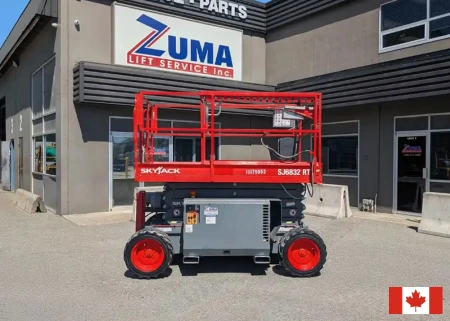
Rough Terrain Scissor Lifts (Diesel-Powered/Outdoor)
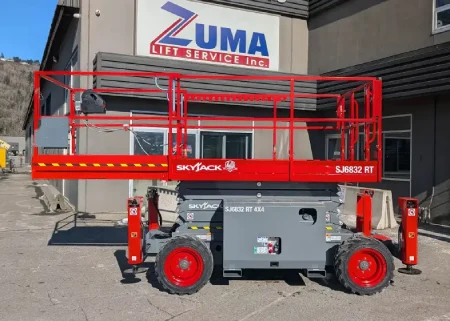
Outdoor job sites require scissor lifts with more stability, traction, and lifting power, where electric scissor lifts can’t operate. Rough terrain scissor lifts are designed for heavy-duty outdoor use on areas with uneven, muddy, or sloped surfaces. This type of scissor lift is equipped with four-wheel drive, heavy-duty tires, and high ground clearance, which provides exceptional traction and balance on gravel, dirt, or sloped terrains. They also offer higher load capacities and greater lift heights compared to electric scissor lifts.
One of the best advantages of rough terrain scissor lifts is that, unlike electric models, they’re designed to handle different weather with ease. Without further ado, let’s quickly assess the outdoor advantages and operational specifications that rough terrain scissor lifts offer:
Rough terrain scissor lifts excel in strength, reach, and traction, which offer safe and efficient lifting even in the harshest outdoor environments.
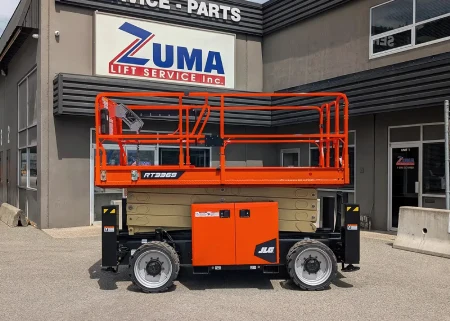
Mini & Slab Scissor Lifts (Narrow/Lightweight)
Mini and slab scissor lifts are designed for confined indoor areas where portability and compactness in vertical access equipment are valuable. This type of scissor lift has narrow frames that allow operators to move easily between shelving aisles, pass through standard doorways, and even fit inside elevators. Even though they are smaller in size compared to electric and rough terrain scissor lifts, they maintain solid stability and reliable lift capacity to work in compact areas.
Rough terrain scissor lifts excel in strength, reach, and traction, which offer safe and efficient lifting even in the harshest outdoor environments.
Mini and slab scissor lifts are the best option in controlled indoor environments. They have a small turning radius that doesn’t consume too much space when moving the equipment in tight areas.
Hydraulic Scissor Lifts (Mechanical Principle)
Hydraulic scissor lifts operate through a powerful mechanical system by using hydraulic fluid pressure to raise and lower the platform. It works by pushing the hydraulic fluid into the cylinders to extend the arms smoothly and lift the platform steadily and in control. Since this type of scissor lift doesn’t rely on complex electronics, they are often easier to maintain and even offer longer service life with proper care.
Hydraulic scissor lifts are often used in warehouses, factories, and workshops where heavy items need to be lifted safely and efficiently. The table below shows a quick overview of their main features and advantages:
Hydraulic scissor lifts are ideal for businesses that need a strong, reliable, and easy-to-service lift for everyday use.
Pneumatic Scissor Lifts (Air-Powered/Eco-Friendly)
If a hydraulic scissor lift uses fluid, a pneumatic scissor lift uses compressed air to raise and lower the platform. They are one of the most eco-friendly types of lifts available in the market. Since they don’t rely on oil or fuel, they completely remove the risk of fluid leaks and emissions, making them the best option for sensitive environments like food processing, pharmaceuticals, and clean manufacturing areas.
Pneumatic scissor lifts may not be as powerful as electric or hydraulic scissor lifts, but they are valued for their safety and eco-friendliness. You’ll often see them being used for light to medium lifting tasks. The table below summarizes their unique key features:
Pneumatic scissor lifts are a smart investment for businesses where oil or exhaust fumes are not an option.
Compare Scissor Lift Types
Comparing scissor lift types side by side is the smartest way to make an informed decision. Each of them offers unique strengths depending on the workspace, power source access, and project demands. A direct comparison eliminates the guesswork; that’s why Zuma created this section to make sure you are confident with your choices.
The table below summarizes the key differences among the main types of scissor lifts to guide your selection process:
Choosing the Right Scissor Lift Type
Aside from comparing models, it’s important to match the scissor lift’s capabilities in terms of your specific work conditions. Every job site is different, and factors like location, weather, surface type, power access, and height requirements greatly affect the safety and efficiency of your chosen scissor lift type.
Always remember to assess how your work environment and load align with the lift’s design and power system. To ensure you’re well-prepared to choose the right lift, the next sections highlight the main factors that can help you find the best match for your work needs.
Consider the Terrain
One of the most common mistakes when choosing a scissor lift is overlooking the type of ground it will operate on. The surface beneath the lift directly affects stability, traction, and safety, and using the wrong model on unsuitable terrain can lead to downtime, mechanical strain, or even tip-over hazards. It should start with understanding your job site’s surface conditions and how they interact with the lift’s tires and suspension.
Before deciding which scissor lift type suits your site, take time to assess the key points listed below:
- Is the surface smooth, paved, or finished?
- Will the lift need to operate on uneven, muddy, or gravel-covered ground?
- Does your site experience frequent rain, slope, or soft soil that could affect traction?
- Are there ramps, curbs, or narrow pathways the lift must navigate?
- Do you require non-marking tires to protect indoor flooring?
To ensure compliance with federal safety standards and reduce the risk of accidents, review CSA standards official aerial lift safety guide for best practices on inspection, operation, and fall protection.
Always match the lift’s design to the least stable terrain it will encounter, not just the average surface. For instance, if your site alternates between paved and compacted gravel, a rough terrain scissor lift provides a safer and more versatile solution than an electric model meant for smooth floors.
Power Source Availability
The power source of your scissor lift affects productivity, maintenance costs, and where the equipment can safely operate. Choosing the wrong power source can lead to frequent recharging downtime, noise complaints, or even restrictions in indoor facilities.
The table below is a quick guide to help you decide which option fits your project best:
Think long-term, not just about today’s job. A lift that fits your current power setup may limit your mobility later. Assess your site’s access to electricity, terrain demands, and safety restrictions before deciding. Evaluate your site first; the right power source should keep your workflow uninterrupted.
Working Height and Platform Load
Undershooting height limits can slow down productivity and force unsafe workarounds, while overestimating load requirements can lead to unnecessary costs. Every scissor lift is engineered for specific reach and weight ranges.
To make your selection easier, here’s a quick reference table showing the typical working heights and platform capacities for the main types of scissor lifts. Use this as a guide when evaluating what your site and crew need before investing:
The right balance between height and capacity is often overlooked, yet it’s one of the top causes of lift misuse on job sites. When in doubt, calculate the total load, including workers, tools, and materials, then leave a safety margin. A properly matched lift should save you time and prevent costly wear from overloading or overreaching.
Need Help Choosing the Right Scissor Lift Brand?
At Zuma, we help businesses find the perfect scissor lift by matching each project’s needs with the right brand and model. Our team has hands-on experience with all major scissor lift brands, allowing us to recommend lifts that deliver reliable performance, safety, and value for your specific application. Our goal here is to ensure you make a confident and informed decision by taking advantage of our years of experience with the industry-leading brands.
As an authorized dealer and trusted partner of the leading scissor lift manufacturers, we only offer genuine equipment and warranty coverage. Explore the options from our top brand partners below to see which one aligns best with your site requirements and operating preferences. If ever you feel overwhelmed with this wide selection, we also offer free consultation to guide your choices.
Still Not Sure Which Type You Need?
Choosing the right scissor lift can be challenging, especially when balancing height, terrain, and budget requirements. That’s where Zuma’s equipment experts come in. Our team helps buyers and operators compare options, understand power systems, and identify which lift configuration delivers the best performance for their job site.
If you need to narrow down models or want to explore other alternatives, we’re here to guide you every step of the way.
FAQs About Scissor Lift Types
What are the different types of scissor lifts available in Canada?
What category is a scissor lift: 1A, 3A, or 3B?
What is the difference between Electric and Rough Terrain scissor lifts?
What does "4x4" mean on a scissor lift?
Which scissor lift type is best for indoor warehouse use?
How high can different types of scissor lifts reach?
Are hydraulic scissor lifts still common?
What is the difference between AWP and EWP?
Which scissor lift type has the highest safety rating?
How do I choose the right scissor lift type for my project?
Why Zuma

Reliable Delivery
We make equipment delivery simple and stress-free with door-to-door shipping options tailored to your needs. Our process ensures timely, secure, and hassle-free arrival!

Expert Support
With over 20 years of industry experience, our team provides trusted guidance, technical expertise, and ongoing support. We've got you covered!

Unmatched Quality
Every lift undergoes a rigorous 100-point inspection, with any issues fixed using genuine parts before a full service and safety check. Only after meeting our strict standards is it approved for delivery!


%20(1).avif)