-p-2000.avif)
%20(1).avif)


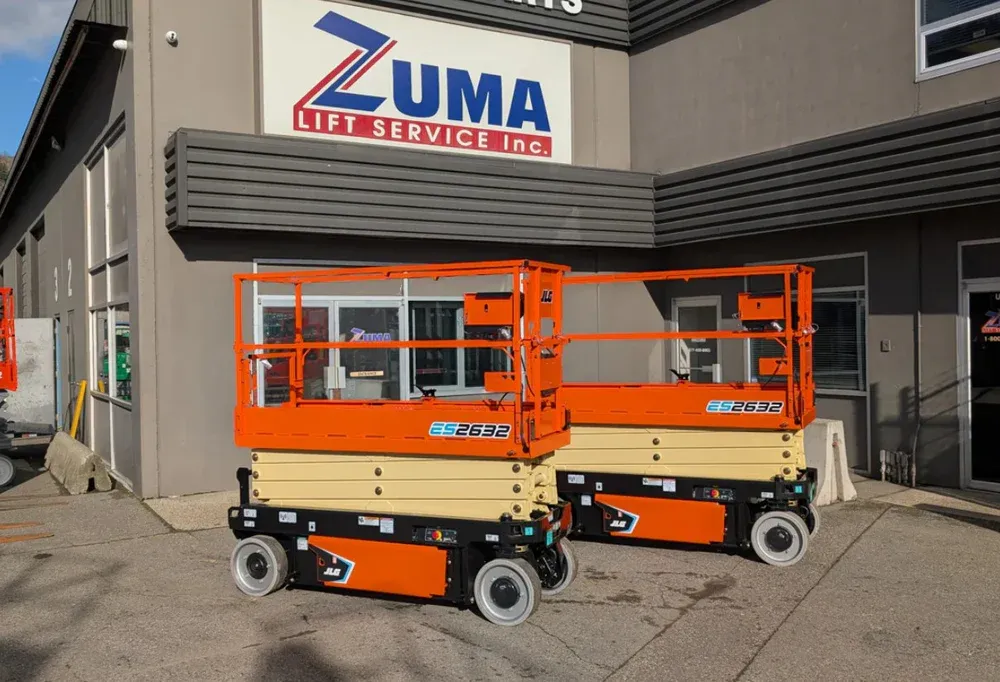
Quick Reference: Average Scissor Lift Weights
- 19 ft Electric Scissor Lifts: Your go-to choice for indoor tasks typically weighs between 2,700 and 3,500 lbs (1,225–1,600 kg). We rely on these because they are light enough to tow on standard trailers and are generally safe for sensitive finished floors.
- 26 ft Scissor Lifts: Weights here depend entirely on the application. For indoor work, your typical electric lift hovers around 5,000 to 6,000 lbs. But Rough Terrain (RT) models are a different animal. To give you a stable platform on dirt or gravel, they need a heavier chassis and engine package, which pushes the total weight up to the 7,000–9,000 lb range.
- Large Rough Terrain Lifts (32–50+ ft): You're looking at anywhere from 8,000 lbs to over 15,000 lbs for the big 50-foot models. Forget about towing this yourself unless you have a commercial rig. More importantly, make sure your site is solid; if the ground is soft or thawing, a machine this heavy will sink immediately.
- Machine Weight vs. Platform Capacity: Don't mix these up. Machine Weight is the total mass of the unit (what the floor supports). Platform Capacity is the max weight of workers and tools you can lift in the basket (usually 500–1,500 lbs).
- Why Weight Matters: This is about protecting the property (and your wallet). We’ve seen operators drive a 6,000 lb machine onto a finished floor without checking the specs, and the result is always the same: cracked tiles and a massive repair bill. Always confirm the floor load capacity (PSF) before you roll in, it is much cheaper to check the manual than to replace a client's floor.
At Zuma Canada, we look at scissor lift weight the same way you do: not as trivia, but as a planning tool. Weight affects transport, it affects floor loading, and depending on where you’re hauling, it can affect permitting too.
We put this guide together to give you a clear, practical understanding of scissor lift weight and what it means on real jobs. By the end, you’ll know:
- The typical weight ranges for compact, mid-size, and heavy-duty models
- How platform height, materials, and power type influence overall scissor lift weight
- Practical considerations for transport, floor loading, and jobsite manoeuvrability
How Much Does a Scissor Lift Weigh by Size? (With Chart)
There’s no single number. It depends on the machine, but here is a solid rule of thumb: your average 19-foot electric slab lift tips the scales around 2,700 lbs (1,225 kg). That sounds manageable, but once you move up to the big rough-terrain diesels, you’re looking at over 12,000 lbs (5,400 kg) of steel.
These machines are packed with heavy counterweights and lead-acid batteries; guessing is the quickest way to crack a client’s finished floor or overload your trailer axles.
We’ve broken down the specific weights by class and height below so you can verify your floor loading and transport limits before the equipment arrives.
Remember, you can see a discrepancy of several hundred pounds depending on the brand, model, and options. That’s normal. It’s also why you should verify the specific unit you’re renting or buying, not just the category.
Average Weight of a 19 ft Scissor Lift
If the work is inside, you use this category. A 19 ft scissor lift stays between 2,700 and 3,500 lbs. It is a simple fact of the trade. These are often electric slab models built to be compact for easy manoeuvrability in tight spaces and to help protect smooth indoor floors.
Here’s the part people like about 19-footers: they usually do not require a heavy-duty trailer. A standard equipment trailer rated for 7,000 to 10,000 lbs can often handle one to two units at the same time, depending on how you load and what your trailer is actually rated for.
You also see these lifts constantly in retail spaces and warehouses because the weight is commonly within indoor floor limits, which makes planning simpler.
They’re popular for tight turning radius and compact footprint, but don’t let “small” turn into “casual.” Daily checks still matter, and so does using the lift the way it’s designed.
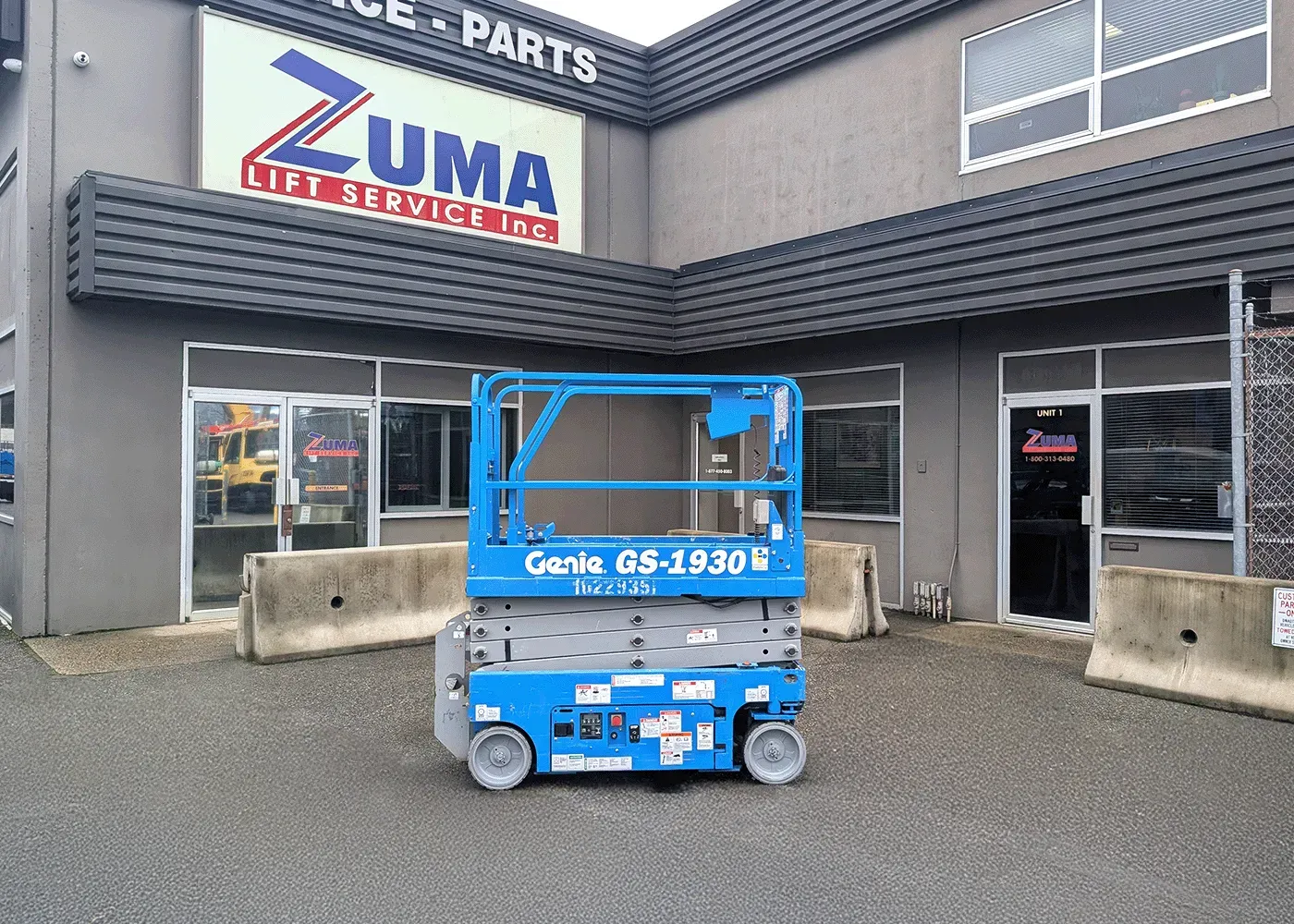
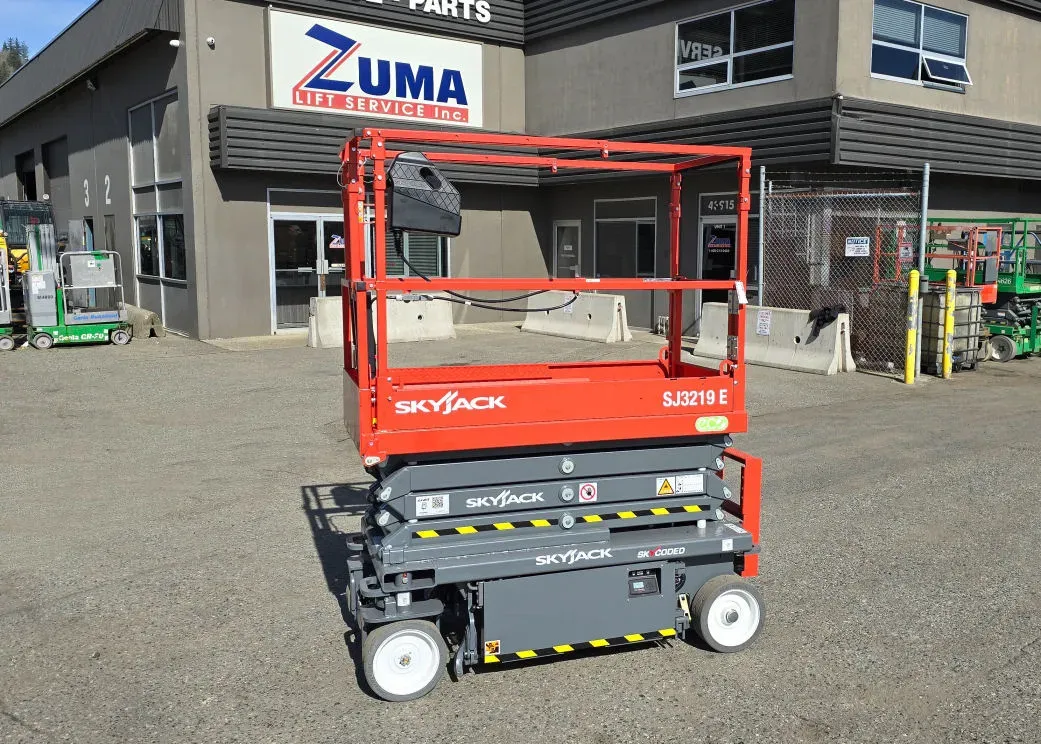
If you take one thing from the smaller lift sizes, make it this: weight is what makes the rest of the plan work. Guessing is how you end up scrambling at the dock or watching a slab edge chip because the point load was higher than expected.
Average Weight of a 26 ft Scissor Lift
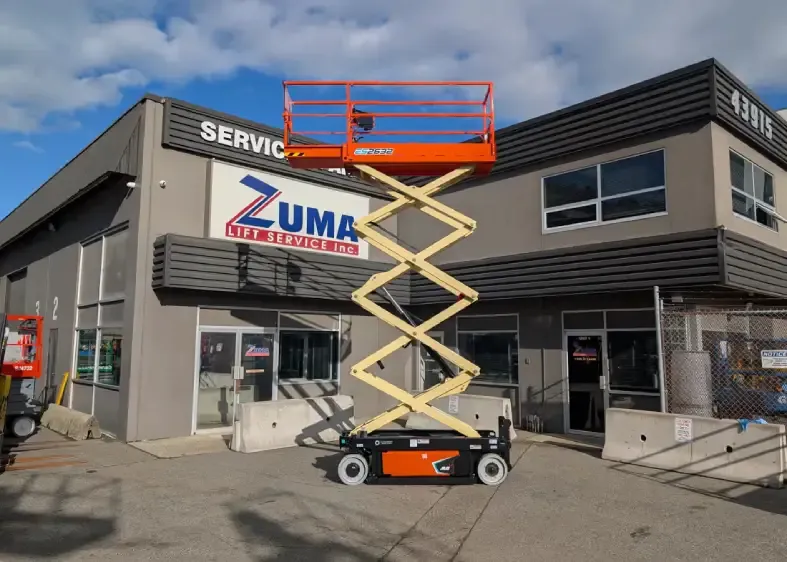
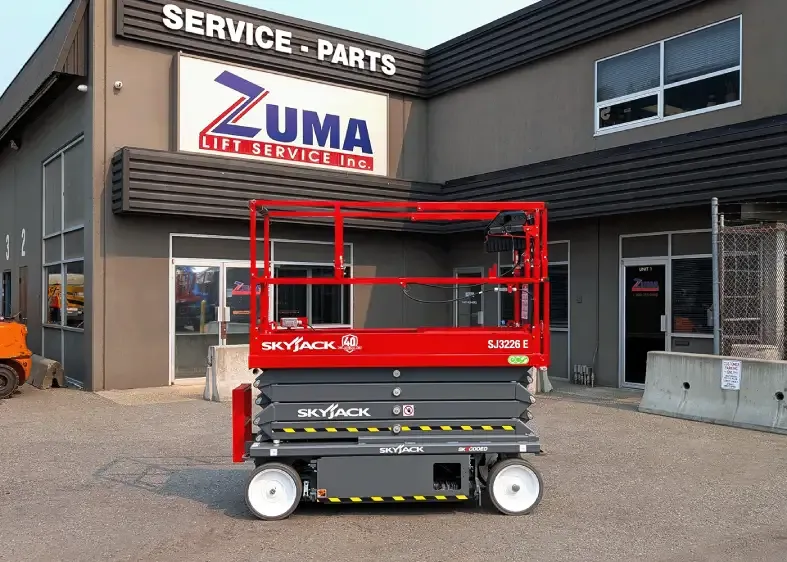
A 26 ft scissor lift is heavier than a 19-footer, and this is where “electric vs rough terrain” really changes the number. Electric slab models in this range weigh about 5,000 to 6,000 lbs, while rough-terrain models can be 7,000 to 9,000 lbs.
The electric slab versions are built for indoor use. They typically come with non-marking tyres, compact frames, zero emissions, and quieter operation.
If the ground is not level, get a rough terrain model. They carry big engines and pneumatic tires. These are the machines that belong out in the open.
And since this is Zuma Canada, we have to talk about cold starts. At -20°C, batteries lose some punch, and hydraulics can feel sluggish until the machine warms up. If you’re working outdoors in the Prairies, Northern Ontario, or anywhere that gets a proper winter, plan for it instead of hoping it “acts like it did in July.”
Weights for 32 ft, 40 ft & Rough Terrain Lifts
Once you get into larger lifts, weight becomes a big part of the conversation, not a footnote. These machines are extremely capable, but they ask more of your site, your transport, and your prep.
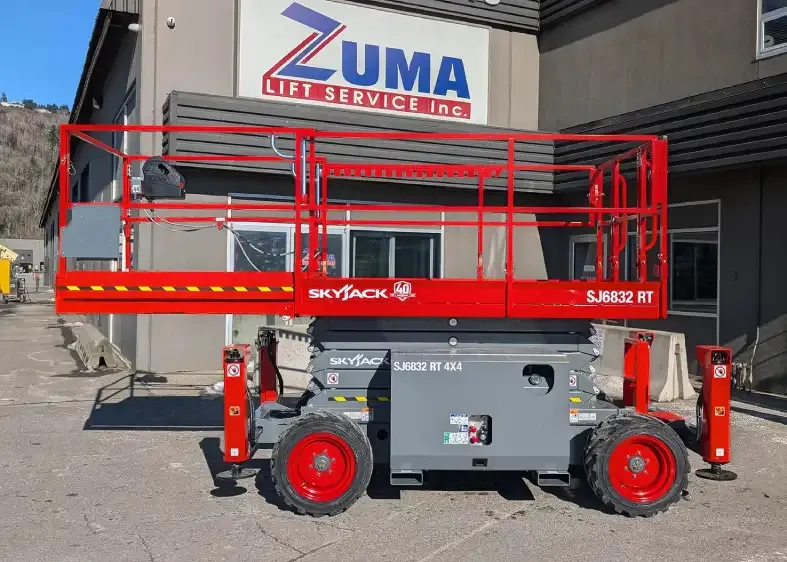
Scissor lifts from the 30 to 46 ft range typically weigh 8,000 to 12,000 lbs, while 50 ft industrial models can exceed 15,000 lbs.
These categories tend to have more robust hydraulic systems, thicker structural steel, and platform decks around 6 to 8 ft long, so multiple workers can work safely up top.
.webp)
In Canada, your reality is provincial. Weight limits, permitting, and enforcement can vary by province and sometimes by route. So if you’re hauling across town or a few hundred km to the next job, do the boring checks up front: trailer rating, combined weight, tie-downs, and any permit requirements that apply to your setup.
Scissor Lift Weight vs. Scissor Lift Weight Capacity: What’s the Difference?
People mix these up all the time, and it’s an easy fix once you hear it clearly.
- Scissor lift weight is the machine’s own weight.
- Scissor lift capacity (weight capacity) is how much the platform can safely lift, including you, your tools, and materials.
Most scissor lift platform limits range from 800 to 2,200 lbs, depending on the size and brand.
For Canadian worksites, the rating plate and manufacturer instructions are your baseline, and many employers align their MEWP programs to CSA B354 requirements. The rules change depending on where you stand. Groups like WorkSafeBC or the MLTSD in Ontario set the tone. You must follow what they say on the job site.
What Affects Operating Weight? (Height, Power & Terrain)
There is a reason why a scissor lift gets heavy. It is built to do more work. Each component is built around stability, and one of the biggest drivers is working height.
When lifts go higher, the structure, frames, and systems get larger to keep the platform stable at full elevation.
In plain language, anything that helps a lift safely reach higher or handle tougher conditions usually adds mass.
Power Source: Electric vs. Diesel/Rough Terrain
Power systems add a lot of weight. Electric scissor lifts are lighter because they use small motors and batteries. The rough terrain units are different. They carry big engines and fuel systems that add weight.
Diesel and rough-terrain scissor lifts are meant for heavy-duty tasks on challenging surfaces. They’re built with thicker metals and frames to stay stable on uneven ground.
Winter in Canada changes the work. The cold gets into the batteries and the hydraulic lines. It is best to have a warm place for storage and a plan for charging. Do this and you will avoid a slow, frustrating start.
Manufacturer and Models - Scissor Lifts Weights by Brand
No two scissor lift models weigh exactly the same. Brands use different frame materials, power systems, hydraulic designs, and reinforcements.
Even small upgrades can change weight enough to matter for transport.
Here are a few common models and typical weights:
How Attachments & Accessories Increase Scissor Lift Weight
Scissor lifts don’t just get heavy because of size. The little “extras” add up fast, and those extras often show up on the rental yard spec sheet as a line you barely notice until you’re loading the trailer.
Below are common features and attachments that add another layer of weight to a scissor lift:
- Outriggers and stabilisers: steel supports for better balance on uneven surfaces
- Dual-fuel or larger engines: heavier powertrains designed for rough-terrain conditions
- High-capacity battery packs: bigger amp-hour batteries for longer runtime
- Foam-filled or pneumatic tyres: heavier alternatives to standard non-marking tyres
- Extended platform decks: added steel sections that increase reach
- Reinforced guardrails: thicker rail systems for higher working heights
- Higher hydraulic oil capacity: larger reservoirs and stronger pumps
- Cold-weather packages: heaters, insulated lines, and oil warmers
- Onboard chargers or generator systems: integrated power sources for remote sites
- Telematics modules: GPS and monitoring units with brackets and casing
Why Weight Matters: Transportation & Floor Loading Capacity
Knowing the weight is a simple way to protect the work. It keeps you from damaging the warehouse tiles or cracking a slab. You must be sure the surface can hold what you are driving.
A scissor lift that’s too heavy for the ground you’re working on can crack concrete, overload elevated floors, or damage warehouse slabs.
This is also where ROI shows up. A cracked floor, a delayed crew, or a last-minute transport change costs more than taking ten minutes to confirm weight before the lift arrives.
Transportation and Trailering Requirements
The weight of a scissor lift dictates the legal and safety requirements needed to transport it.
Heavier units like rough-terrain and high-reaching models may require a dual-axle trailer, a higher-capacity truck, or special transport permits.
For Canadian hauling, focus on provincial requirements and the route you’re running. If you are moving gear across the country, you should know the local codes. It matters what the rules are at your destination. Do not just rely on what you knew when you started.
Jobsite Floor Load Capacity
Most job sites have flooring or slabs with a defined load rating, usually measured in pounds per square foot (PSF).
When a lift’s weight exceeds that limit, the pressure can cause deflection, cracking, and long-term weakening.
To stay safe, check the floor’s PSF rating in building plans, then compare it against the lift’s weight and platform load.
For heavier lifts, consider load distribution aids like plywood sheets, steel plates, or load-spreading mats to reduce concentrated pressure points.
Ground Pressure and Surface Impact
Even if a surface can support the total weight “on paper,” concentrated loads under tyres, outriggers, or scissor arms can create high-pressure points that damage asphalt, concrete, or softer ground.
Over time, repeated use in the same spot can cause rutting, cracking, or settlement, which can compromise the worksite and the lift’s stability.
In Canadian weather, I’ll add one practical note: freeze-thaw cycles can change ground conditions fast. You cannot trust the ground to stay the same. It softens in the sun and freezes hard at night. It is a lumpy surprise for a man who is not looking. Check your footing often.
Where to Find the Specs & Data Plate
There are three ways to double-check a scissor lift’s weight to stay within floor load limits, trailer capacities, and safety standards.
It’s usually a mix of documentation and a quick on-machine check.
The sections below cover where to find scissor lift weight using the most reliable methods.
Check the Compliance Plate
The exact weight of a scissor lift can be found on the compliance plate (also called the specification plate or data plate).
It may look like a durable sticker or a small metal plate on the machine, and it lists official information like weight, rated capacity, and other specs.
Steps to inspecting the compliance plate location:
- Locate the plate: Usually on the base, chassis, scissor stack, or near the operator controls.
- Identify key information: Look for operating weight, platform capacity, model, and power source.
- Confirm accuracy: Compare the numbers with documentation or rental info and note any attachments.
Many Canadian sites treat that plate as non-negotiable for MEWP use, and it ties directly into CSA B354-aligned programs.
Consult the Manufacturer's Spec Sheet
If you want the weight, check the sheet from the factory. It tells you exactly what the machine is. It is faster than guessing.
It might feel old-school, but it’s still how a lot of experienced operators and supervisors confirm details in practice.
These documents include operating weight, but also platform capacity, dimensions, power source, and optional features that can add weight.
Ask Your Rental or Sales Rep
Sometimes the fastest answer is the simplest one: ask someone who knows the equipment well.
A good rep will confirm base weight and call out anything that changes it, like bigger batteries, tyre upgrades, or deck extensions.
At Zuma Canada, we take the time to understand your needs, recommend realistic options, and clarify how attachments, capacity, or lift height affect your plan.
If your situation is tricky (sensitive finished floors, tight access, winter outdoor starts), a quick chat with a specialist can save you from an expensive mistake. It’s often the difference between “it fits on paper” and “it works on site.”
Why Choose Zuma Sales for Your Lift Equipment Needs?
Good equipment decisions feel boring when they’re done right. That’s the point. You want the lift to show up, fit the site, run safely, and keep the crew moving.
At Zuma Sales, we make sure recommendations make sense both on paper and on-site by assessing job-site requirements and aligning potential model matches with budget and needs.
Here are more reasons to choose Zuma Canada:
- Expert guidance: Help navigate brands, models, and lift types, with recommendations based on project needs and operational constraints.
- 24/7 online support: Quick answers for planning, troubleshooting, or comparing units outside business hours.
- Industry-leading brand selection: Access to top manufacturers, with options across multiple brands for new and used scissor lift units.
- Compliance-focused: Guidance on permits, trailer requirements, and site preparation to avoid operational or legal issues, framed for Canadian expectations (including CSA B354-aligned practices).
- Flexible financing options: Tailored payment plans that fit project budgets for new and used equipment.
- Nationwide delivery: Shipping across Canada, coordinated with logistics so equipment arrives on time.
Frequently Asked Questions
What should you know about 2-man lift limits?
You look at the platform capacity first. Most often it is 500 to 1,000 lbs. Two workers can stay safe within those numbers as long as they don't overdo the gear.
How much does a typical 19’ scissor lift weigh?
Most 19-foot lifts fall in the 2,700 to 3,500 lb range. They are typical electric slab units meant for working under a roof.
Is there a difference between weight and capacity?
Yes. When you talk about weight, you are talking about the machine. It is how much the whole unit weighs before you ever get into it.
Are Genie scissor lifts very heavy?
It depends on the model. A small one like the Genie GS-1930 is only a couple thousand pounds. But if you get into their big units, you can easily go past 10,000 lbs. It is a big range.
How much does a 26’ scissor lift weigh?
A 26 ft scissor lift typically weighs 5,000 to 9,000 lbs, depending on the type. A rough-terrain unit has a lot more weight to it than an electric slab lift. You should know which one you are hauling.
How many pounds is a 50-foot scissor lift?
It is a heavy beast, usually 15,000 lbs on the low end. They use a lot of reinforced steel to make sure it doesn't flex. When you add in the big hydraulic systems needed for that kind of height, the weight adds up fast. It is meant for serious work.
How does the weight of a scissor lift impact transportation costs?
When a lift is heavy, everything gets harder. You need a bigger rig to haul it and more fuel to get it there. If it's over a certain weight, the permits alone will cost you. It is a big part of the budget that you shouldn't ignore.
How do floor loading limits affect my choice of scissor lift?
It is one of the biggest factors. Floors have a cap on how much pressure they can take. Driving a heavy lift onto a weak floor will cause damage or worse. You have to verify those load numbers early so you aren't surprised by a sinking machine or a broken floor.
About the Zuma Equipment Team



%20(1).avif)