-p-2000.avif)
%20(1).avif)


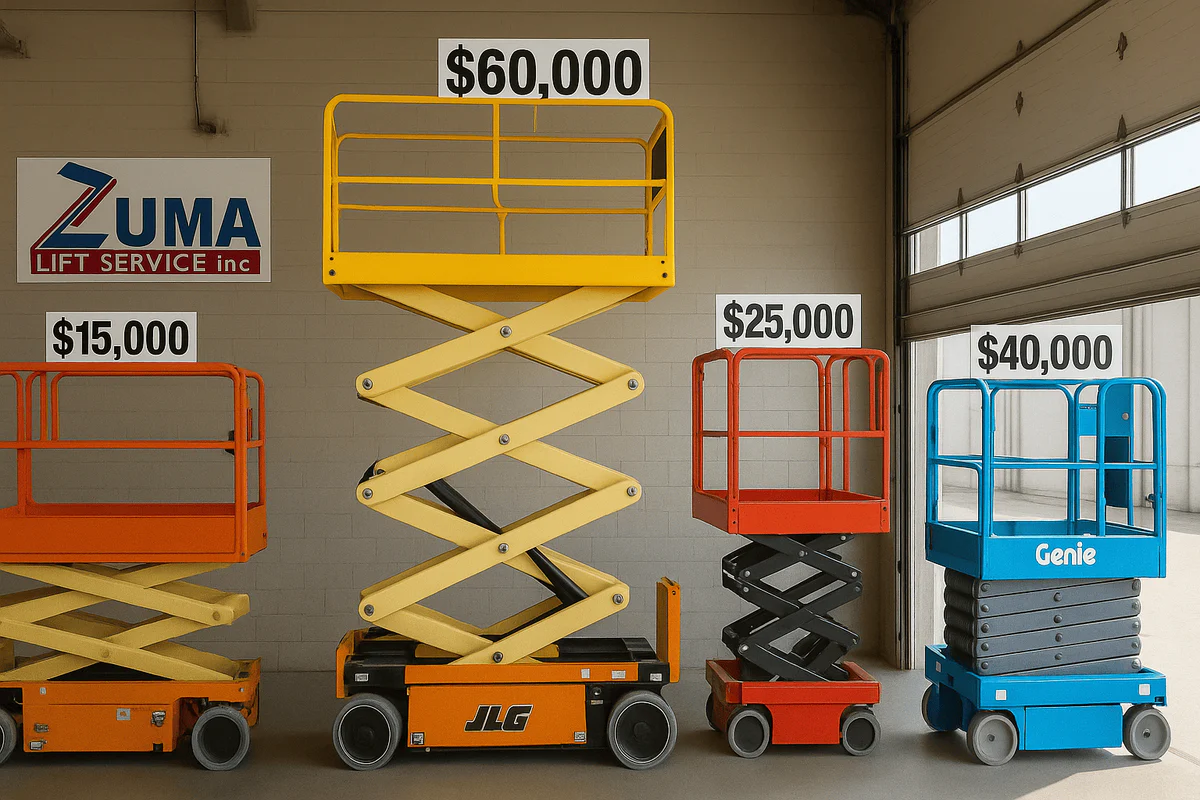
Quick Guide: Scissor Lift Cost Breakdown (2026)
- Buying New: If you are looking for something fresh off the assembly line, expect to lay out anywhere from $15,000 to $60,000. That spread is wide because it depends entirely on the machine's capability. A standard 19-ft electric slab lift for indoor work is going to be on the lower end, while a 40+ ft rough terrain diesel that can handle a muddy job site in November will push you toward the top of that bracket.
- The Used Market: You can find solid used equipment typically trading hands for $5,000 to $20,000. The price tag here really comes down to the machine’s history. Don't just look at the model year, check the hour meter and the maintenance logs. A well-maintained older unit is often a better buy than a newer one that’s been ridden hard.
- Rental Rates: If you’re just renting, rates are pretty standard across the provinces. You are looking at roughly $100–$350 a day or $350–$1,200 for a week. For longer projects, monthly rates usually settle between $800 and $3,000. Just remember, those numbers rarely include the trucking fees for drop-off and pickup, so budget accordingly.
- The "Buy vs. Rent" Rule: Here is the rule of thumb we usually go by: if you think you’ll be using the lift more than 30–40% of the year, it’s usually smarter to buy. At that point, you are putting money into an asset you own rather than just burning cash on rental invoices.
- Brands & Resale: You get what you pay for. Big names like Genie, JLG, and Skyjack might cost you a bit more upfront. However, they offer way better reliability and hold their resale value much better in the Canadian market than the cheaper off-brand alternatives.
Scissor lift pricing is one of those topics that sounds straightforward until quotes start coming in. Canadian contractors, warehouse supervisors, and maintenance leads often start with a simple question: how much is the updated scissor lift cost in Canada?
The short answer is that the price range is wide because the “right” lift depends on the job, the site, and how often the equipment will be used. A lift that makes perfect sense for a warm, indoor warehouse in the GTA may be the wrong fit for outdoor work in the Prairies in January. And a weekend rental can look cheap on paper, but then jump once you add delivery, pickup, and extra weeks.
In this guide, you’ll see what businesses are paying in 2026, what pushes the numbers up or down, and the common line items that catch people off guard when buying or renting. The aim is simpler budgeting and fewer surprises when the lift shows up on site.
What Is the Average Scissor Lift Cost?
Buying new will typically cost between $15,000 and $60,000, but you can find decent used units for $5,000 to $20,000 if you are willing to check the hours and overall condition. That price tag swings quite a bit depending on the brand you choose and whether the seller provides a solid maintenance history and inspection report.
In Canada, a few real-world factors also shape the price. Freight matters, especially when a lift is shipped hundreds of kilometres. Regional supply matters too. Larger centres usually have more inventory and more choice. Smaller markets can see fewer options and higher transport costs.
Rentals are a different category altogether. Rates change based on duration, lift type, working height, platform capacity, and where the jobsite is located. The sections below break down typical numbers and the factors behind them.
New Scissor Lift Prices
Buying brand new scissor lifts is usually the safest bet for crews that just need the equipment to run without any headaches or surprise repairs. It offers a level of dependability that is hard to match with older machines since you are starting with a clean slate.
If you treat the machine right and keep up with the service intervals, a new lift is going to last you a very long time. We see plenty of these units putting in over 20 years of solid work before they are finally ready to be replaced.
New lifts also tend to bring fewer early repairs, smoother controls, and newer safety features compared to older units.
The upfront cost is higher than that of used equipment or short rentals. In return, buyers usually get stronger warranty coverage, fewer early repair surprises, and better resale value later, especially for common working heights from brands with solid support.
Here’s a quick snapshot of typical pricing for new electric and rough terrain scissor lifts, plus a few models businesses often stack up in 2026.
New Electric and Rough Terrain Scissor Lifts Average Prices
New equipment tends to fit best when scissor lift work is regular. Think construction finishing, facility maintenance, warehousing, shutdown work, and ongoing service calls. In those settings, a lift that fires up every time and runs smoothly pays for itself in fewer delays.
Used Scissor Lift Average Pricing
Used scissor lifts are popular for a simple reason: you get the upside of ownership without paying full-new pricing. For many Canadian businesses, used equipment is the sensible middle ground between renting forever and buying brand new.
Used pricing comes down to hours, maintenance history, and how the machine was handled.A lift that lives indoors and follows a proper service schedule is often a strong buy. A lift that ran hard outdoors and missed maintenance can turn into a repair project.
Here is a general breakdown of used scissor lift pricing by type, plus the items that should be checked before committing.
Used ownership can also reduce scheduling risk. The lift is on hand when the job needs it, not when a rental yard has availability.
For Canada, winter performance needs to be part of the buying conversation. You will find out pretty fast if you have bad batteries or old hydraulic fluid once the temperature drops.
That is why digging into the maintenance history is non-negotiable for any machine that will live outdoors or in cold storage. A lift can seem perfect during an indoor test drive, but might not have the power to perform at -20°C.
Scissor Lift Rental Costs
It makes sense to rent if you only have a temporary need or want to cover a seasonal spike in workload. Your rate is going to change based on the specific machine type and what the availability looks like in your area.
Delivery and pickup fees matter just as much as the daily rate. In Canada, those transport charges can climb quickly when the jobsite is far from the rental yard. If equipment needs to travel hundreds of kilometres, freight can become a meaningful part of the total.
Here is a general overview of common rental rates by lift type and duration:
Rentals are flexible, but the spending keeps coming, and there’s no resale value at the end. For regular work at height, it is common to see a weekly rental cost in the same range as a monthly financing payment toward ownership once the job stretches longer than expected.
Key Takeaways on Scissor Lift Cost for Businesses
Here is the straight goods for Canadian operators trying to map out a budget.
- Price follows the machine type: You are looking at $20,000 to $35,000 for a new electric lift, while the big rough terrain models can hit $70,000. The used market is easier on the wallet, usually sitting between $8,000 and $35,000.
- Rent for the short haul: It is the right call for a quick job or a seasonal rush. You don't own anything at the end, but it keeps the site running without the commitment.
- Multiple factors influence cost: Power type, lift height, brand, and maintenance requirements shape the overall investment.
- Trusted dealers help avoid headaches: Clear inspection reports, brand support, and sensible financing options reduce risk.
Still deciding what lift height or platform size fits the job? Zuma’s scissor lift sizing guide can help you choose confidently and avoid paying for extra capacity that will not be used.
Factors That Affect Scissor Lift Pricing
There’s no single set rate for scissor lifts. Pricing moves with the features that affect capability, durability, and long-term operating cost.
Understanding these drivers makes it easier to compare equipment properly, especially when quotes look similar at first glance.
Lift Height and Platform Size
A simple rule applies: more height usually means more money. Higher working heights require reinforced structure, stronger lift components, and more robust stabilisation. Those upgrades raise manufacturing costs, and the purchase price usually follows.
Safety requirements are also part of sizing decisions. In Canada, mobile elevating work platforms fall under CSA B354, and worksites may also align training and enforcement with provincial bodies. For example, compliance and inspection practices can differ between WorkSafeBC in British Columbia and Ontario’s MLTSD, even though the core safety expectations are consistent.
The right lift height and platform size should fit the work. Going bigger than you need adds cost and can create indoor access headaches. Going too small slows the job, increases repositioning, and can tempt unsafe shortcuts.
Power Source (Electric vs. Diesel)
Electric Scissor lifts run on batteries and are the go-to for indoor work, or anywhere you need to keep the air clean. They run quietly and usually cost less to maintain because there is less going on under the hood.
Hydraulic lifts with diesel or dual-fuel engines are built for heavy outdoor work and uneven ground. You typically get more lifting power and can run them hard all day without waiting around for a recharge.
In Canada, winter performance should influence the power choice. Batteries lose their punch fast when it gets down to -20°C, so you have to be disciplined about charging and getting that equipment inside for the night.
Diesel engines are just as tough to manage with cold starts and fuel issues, which is why we often recommend a cold-weather package if you can get one. Even the hydraulics will feel thick and slow until the system builds heat, so using winter fluids and letting the machine warm up is the only way to keep it running smoothly.
Electric vs Diesel Scissor Lift Comparison
Brand and Model Features
You will find that some scissor lift brands dominate the industry simply because their machines are built to last and are fully supported when it comes to repairs and parts. This value is clear when you look at the construction quality and safety systems that keep these units running reliably year after year.
While the initial price tag might be higher, a quality lift pays for itself by keeping your crew working and holding its value when it is time to sell.
Scissor Lift Brands Quick Comparison
Here is a breakdown of leading names in the market:
Maintenance and Warranty Costs
Maintenance and warranty coverage play a much bigger role in your total cost of ownership than most buyers realize. The purchase price is just the starting point, as the real cost includes service labour, wear parts, storage, and how fast you can get back to work when something breaks.
Depending on how hard you run the machine, your annual maintenance bill can sit anywhere from a few hundred dollars to a few thousand. That is why solid warranty coverage is so valuable, as it limits your out-of-pocket repair costs and shows that the manufacturer actually trusts their own equipment. You will usually see a standard one-year deal for parts and labour, with longer coverage on the heavy structural components.
response, and overall start-up behaviour. If a lift will be used outdoors through winter, maintenance planning should include winter-ready practices, cold storage considerations, and the right servicing schedule to reduce downtime.
A scissor lift with a slightly higher price tag and a robust warranty often proves to be the more cost-effective choice over time. It is almost always better to invest in that protection now rather than dealing with the high cost of repairs on a cheaper model later.
Buying vs. Renting: Which Scissor Lift Pricing Model Fits Your Business?
The buy-versus-rent decision comes down to frequency of use, scheduling risk, and whether it is valuable to have equipment available on demand.
Renting can work well for short-term jobs. Buying often makes more sense when work at height is recurring, and delays are costly.
Here is a detailed comparison:
Zuma supports Canadian businesses that want to reduce rental dependency, often by comparing rental totals against financing options. For many teams, consistent monthly ownership payments are easier to justify than repeated rentals that never turn into an asset.
Cost Comparison: Scissor Lifts vs. Other Lift Equipment
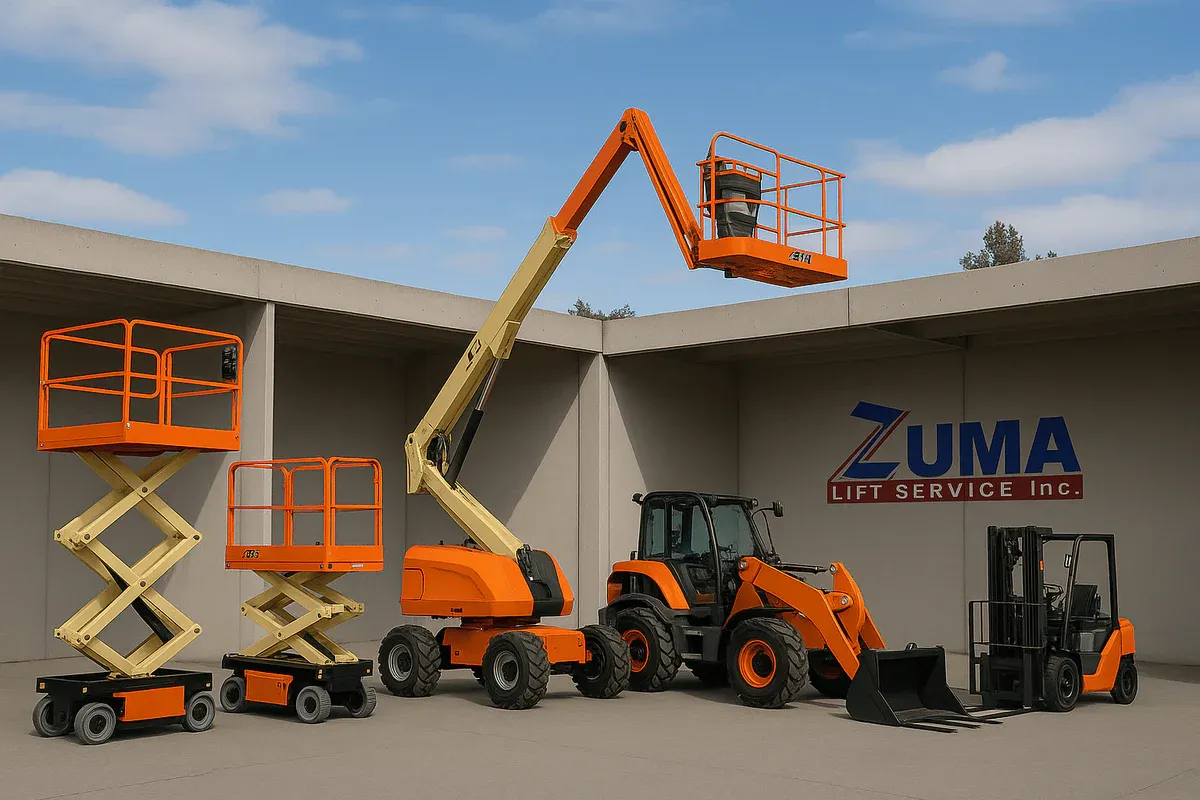
Different lift types solve different problems. Cost matters, but matching equipment to the job matters more.
Scissor lifts are usually the go-to for straight-up vertical access. If you need to reach over obstacles or work out and up. A boom lift, or another platform style, may fit better.
Here’s a side-by-side look at scissor lifts versus other common lift equipment:
This comparison helps you whittle down the shortlist, but the right choice ultimately depends on your site conditions, how often the machine runs, and whether winter operation is in the cards.
Why Choose Zuma for Your Lift Equipment Needs?
Zuma supports Canadian businesses by matching lift equipment to the actual job requirements and budget, rather than just pushing what is in stock.
Our focus is on giving you practical advice, transparent options, and the kind of dependable support that sticks around long after the delivery truck leaves.
Here is what Zuma offers Canadian lift buyers:
- Expert guidance: Specialists help match the right machine to the work, so money is not wasted on the wrong height or capacity.
- 24/7 support: Online support is available whenever help is needed.
- Flexible financing: You can get transparent financing plans, whether you are buying new or used.
- Trusted brands: We partner with brands that have a reputation for reliability and being easy to service.
- Nationwide delivery: Delivery and support are available right across the country, from the big hubs to the remote regions.
Ready to price a lift properly for the next job? Request a customised quote through Zuma.
Frequently Asked Questions
How much is a scissor lift to buy?
Most buyers in Canada will see entry pricing around $12,000 for compact indoor electric lifts. Rough terrain units are a different story and can cost $50,000 or more. The biggest price swings usually come from required platform height, brand, and whether you’re going electric or diesel.
Are scissor lifts expensive?
They’re not cheap, but it helps to think about what you’re getting. A lift is built for safe access at height, repeated use, and jobsite reliability. When it saves labour hours and cuts delays, the cost can look a lot more reasonable.
Is it better to rent or buy a scissor lift?
If you need a lift for a short window, renting keeps things simple. If you’re regularly working overhead, buying usually makes more sense because the machine is available when you need it, and you’re not managing schedules around rentals.
Are used scissor lifts worth the price?
They can be, and sometimes they’re the best value. The key is a proper inspection and real service history. When those check out, used lifts can come in 30% to 50% lower than new and still have years of solid performance left.
Can I finance a scissor lift purchase?
Yes. Financing is common and helps spread the cost over time. It can be a practical way to support cash flow while still building equipment ownership.
What safety features affect the cost of scissor lifts?
Auto levelling, tilt alarms, overload sensors, and stronger guardrail systems can increase pricing. They also reduce risk and support alignment with CSA B354 and provincial occupational health and safety expectations for MEWPs.
Where can I find reliable scissor lifts for sale in Canada?
Zuma carries a full range of new and used scissor lifts, and units are inspected to meet strong safety and performance expectations for Canadian worksites.
How much does it cost to rent a scissor lift for a week?
Weekly rental is commonly $350 to $1,200. Small electric units are usually closer to the low end. Diesel and rough terrain models tend to sit higher.
What factors affect scissor lift pricing?
The height you need is one of the biggest drivers. Platform size matters too, especially if you want room for tools and materials. Brand, power type, and newer safety features can also push the price up.
How long do scissor lifts last?
With consistent maintenance, 10 to 20 years is realistic. Indoor electric lifts often last longer because they avoid weather and rough ground. Outdoor and diesel models can still last, but they usually need more upkeep.
Do scissor lifts hold their value?
They often do, especially when the service records are clean. Genie, Skyjack, and JLG are common examples of brands that tend to resell well in Canada, but condition and maintenance history still matter most.
Do scissor lifts have high maintenance costs?
Not if you treat them like equipment instead of a “run it until it breaks” machine. The regular stuff is predictable: hydraulics, batteries, tyres, brakes, and safety checks. Most operations stay on a two to four times per year service rhythm, depending on hours. Winter is the one time when costs can sneak up, mainly because batteries do not love cold storage or careless charging habits.
About the Zuma Equipment Team



%20(1).avif)